BIOGRAPHIES OF THE VOID
Cosmos
Five objects that decide how the universe behaves. Each one is written the way we photograph it: measured, unembellished, and finished only when the numbers agree.
GRAVITY / ABSOLUTE
Black hole
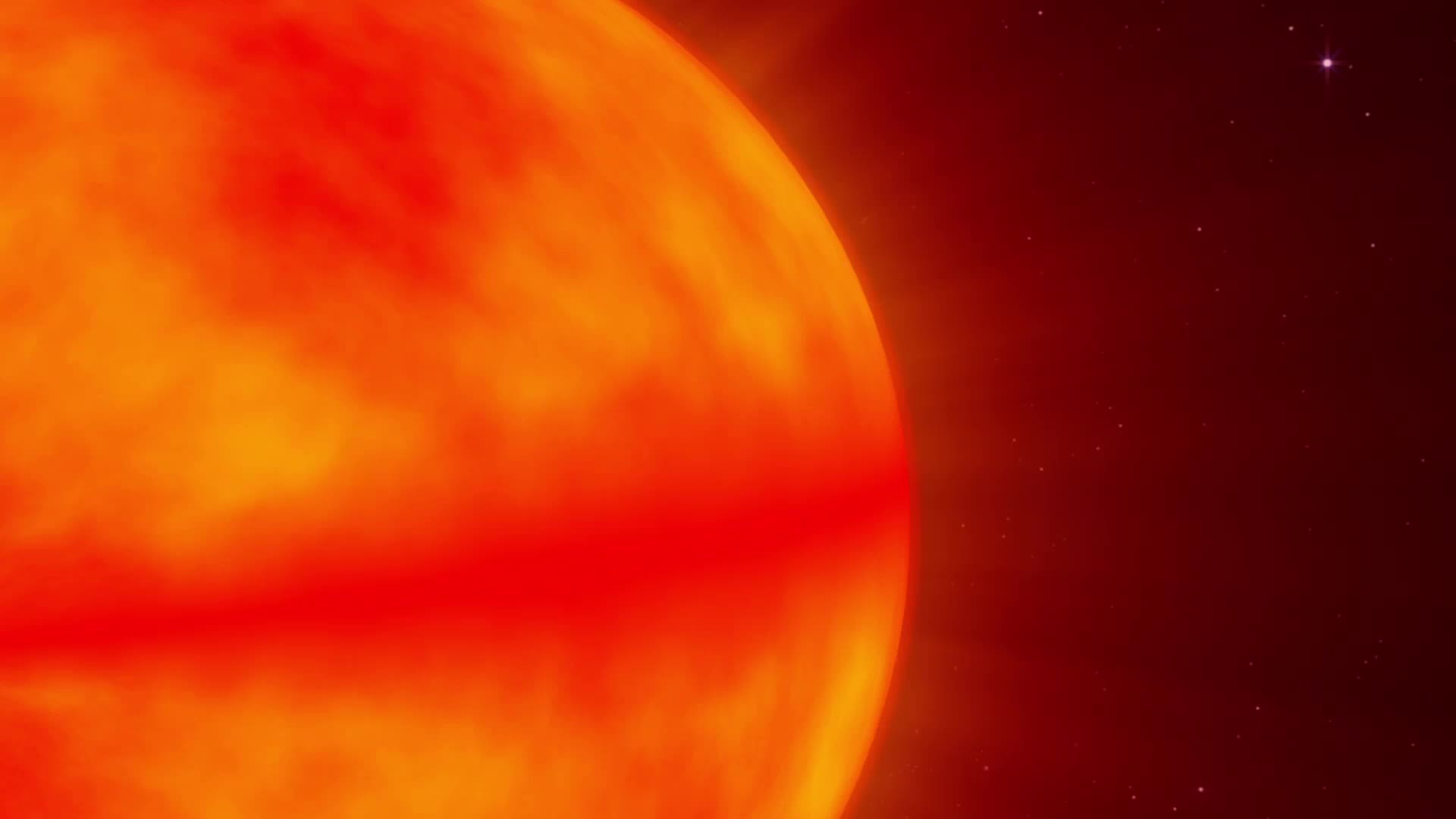
A black hole is not an object so much as a boundary. Gravity curves spacetime so sharply that every path leading outward turns back inward, and the surface where that happens is the event horizon.
Stellar-mass holes are left behind when the core of a massive star collapses. Supermassive ones, millions to billions of times the mass of the Sun, anchor the centres of galaxies including our own.
What a camera records is never the hole. It is the accretion disk: gas compressed and heated to millions of degrees as it spirals in, with light from behind bent around the shadow into a ring.
- SHADOW
- PURE BLACK
- DISK
- MILLIONS K
- ESCAPE
- IMPOSSIBLE
TOPOLOGY / THEORETICAL
Wormhole
A wormhole is a tunnel through spacetime joining two distant regions, first written down as the Einstein-Rosen bridge in 1935. Geometry allows it; matter does not make it easy.
Holding the throat open long enough for anything to cross would require exotic matter carrying negative energy density, a substance never observed at the scale required.
No wormhole has ever been detected. It remains the cleanest illustration of how far general relativity permits reality to bend before evidence has to catch up.
- STATUS
- HYPOTHESIS
- NEEDS
- EXOTIC MATTER
- OBSERVED
- NEVER
STAR / 1 AU
The Sun
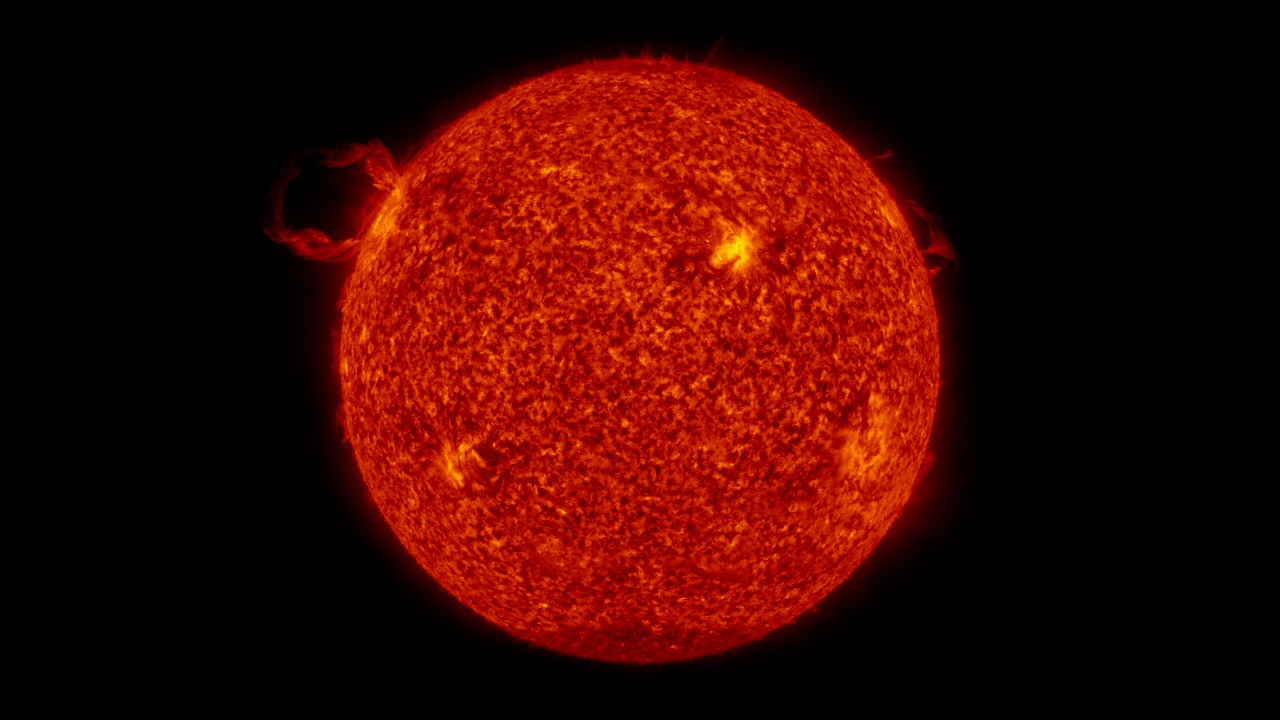
The Sun is an ordinary G-type main sequence star holding 99.86 percent of the mass of the solar system. Every second its core converts about 600 million tonnes of hydrogen into helium.
That energy leaves the core as gamma radiation and takes tens of thousands of years to work its way out, emerging from a surface at roughly 5,500 degrees Celsius as ordinary sunlight.
Around it the corona reaches a million degrees, and its magnetic field drives sunspots, flares and the solar wind that shapes every magnetosphere in the system.
- AGE
- 4.6 BN YEARS
- SURFACE
- 5 500 °C
- LIGHT DELAY
- 8 MIN 20 S
CLOUD / LIGHT YEARS
Nebula
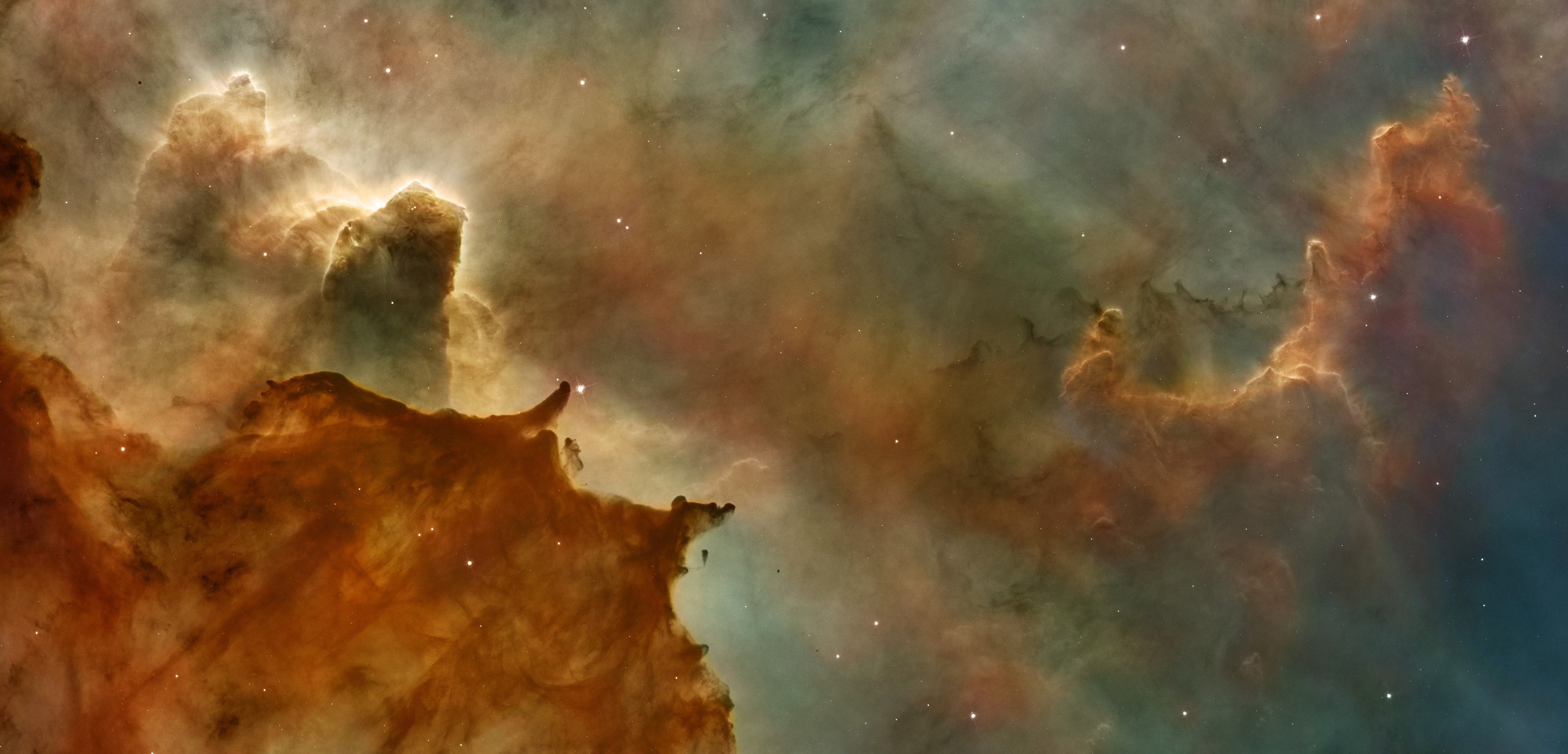
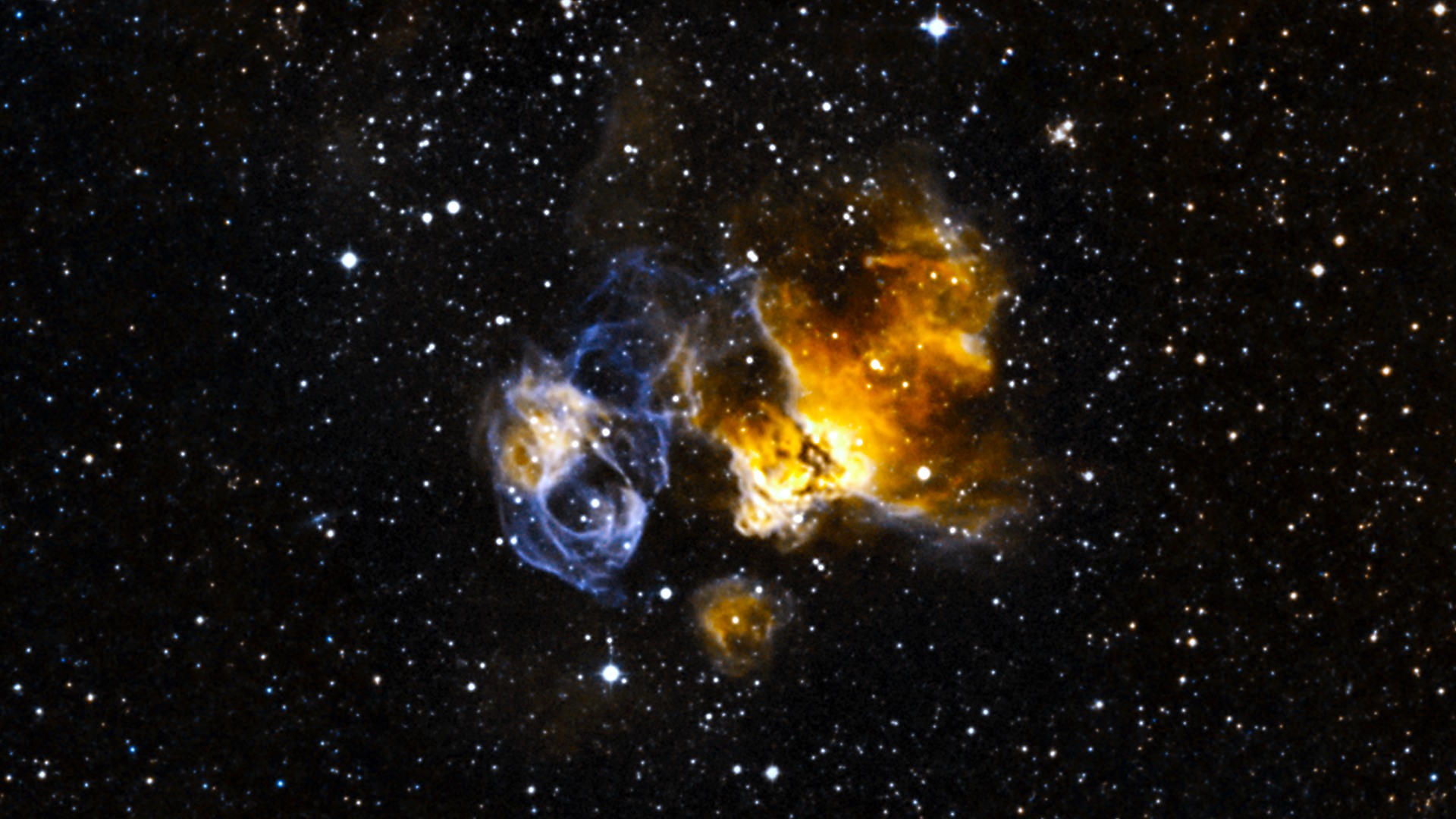
A nebula is gas and dust spread so thinly that a laboratory would call it vacuum, yet stretched across light years it becomes bright enough to photograph from a rooftop.
Emission nebulae glow because hot young stars ionise their hydrogen. Reflection nebulae only scatter light. Dark nebulae block it, and are visible as silhouettes against everything behind them.
Many are nurseries where gravity is still pulling knots of gas into new stars. Others are the exhaled outer layers of stars already finished.
- DENSITY
- NEAR VACUUM
- SCALE
- LIGHT YEARS
- ROLE
- STAR NURSERY
REMNANT / 20 KM
Neutron star
When a massive star dies, the core that survives the supernova is crushed until electrons and protons merge into neutrons. About 1.4 solar masses end up inside a sphere twenty kilometres across.
One teaspoon of that material would weigh close to a billion tonnes. The surface gravity is over a hundred billion times Earth's, and the crust is thought to be the strongest structure in nature.
Conservation of angular momentum leaves many of them spinning hundreds of times a second. With a magnetic field to match, they sweep beams past us as pulsars, keeping time better than most clocks built on Earth.
- DIAMETER
- ~20 KM
- SPIN
- UP TO 700 / S
- FIELD
- 10¹² GAUSS